AWE Visit Report – Gusbourne & Balfour Wineries
Thursday 21st August
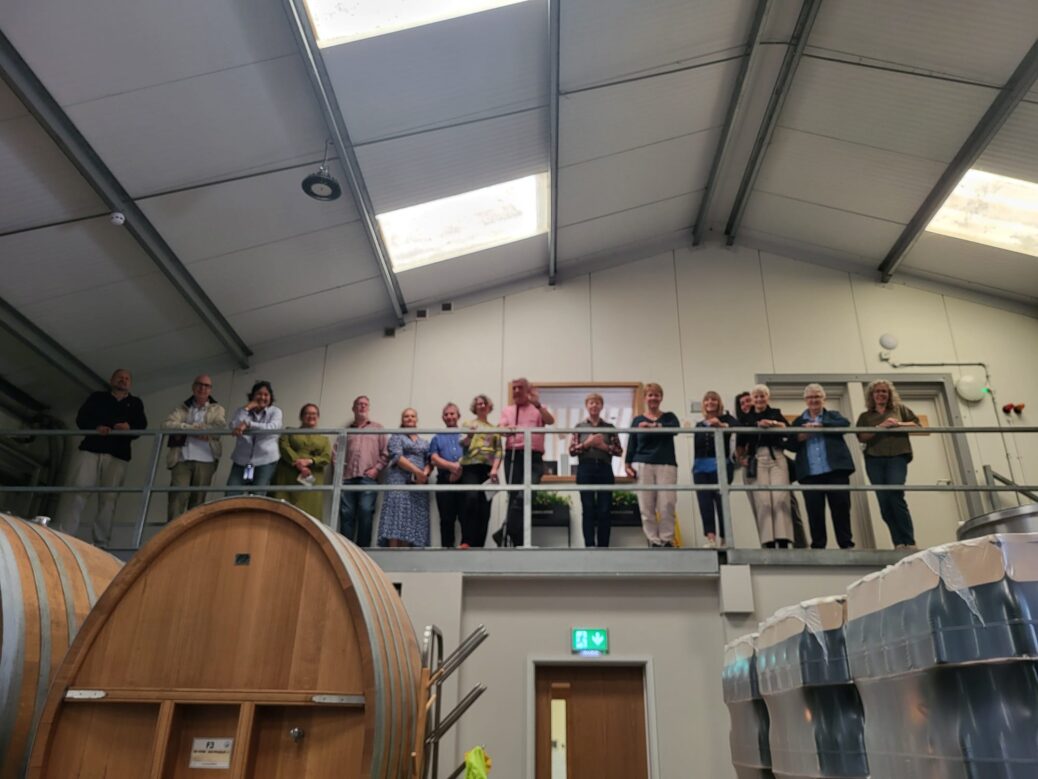
On Thursday 21st August, fifteen AWE members enjoyed a highly informative and thoroughly enjoyable day visiting two of Kent — and indeed England’s — finest wineries: Gusbourne and Balfour.
Journey to Gusbourne
Around ten of us met at St Pancras Station and took the train to Appledore, via Ashford International. There, a local coach driver collected us and drove us to Gusbourne’s striking visitor centre, The Nest. We were warmly greeted by the team and introduced to Steve Kirkham, who began with an overview of the estate — accompanied by a glass of their Brut Reserve 2021.
Gusbourne produces only vintage wines from its own grapes, with plantings restricted to the three main sparkling varieties: Chardonnay, Pinot Noir, and Pinot Meunier. Grapes come from more than 250 parcels, vinified separately as required. A strong commitment to sustainable and regenerative viticulture underpins all of their work.
The Brut Reserve 2021 (71% Chardonnay, 18% Pinot Noir, 11% Pinot Meunier) was very well received. With notes of fresh red and green apple, hints of apple pie, and subtle pastry characters, it showed precision, great length, and refreshing acidity. As Steve explained, Gusbourne prefers to let each vintage speak for itself rather than adhering to a rigid house style.
Vineyard Insights
We then met Jon Pollard, Gusbourne’s Chief Vineyard Manager since 2004. He explained the unique conditions of their 60 hectares under vine (with a further 60 hectares available for potential future planting). The vineyards range from just 2 metres to 40 metres above sea level, on predominantly Wealden clay and Tonbridge sand soils.
Jon described their meticulous pruning methods, clone and rootstock selections, and ongoing regenerative farming initiatives. Cover crops, living roots, and minimal cultivation are central to their approach, while careful vineyard management — including bird nets and even kite-shaped balloons — helps protect the crop.
Tasting at Gusbourne
Back inside, we sampled a range of Gusbourne wines:
- Brut Reserve 2021 (as above)
- Late Disgorged Brut Reserve 2015 – richer, rounder texture with extended ageing
- Single Vineyard Blanc de Blancs 2019 – bright, citrus-driven, and widely considered the standout wine of the tasting
- The Commander’s Vineyard Blanc de Blancs 2019 – more structured, from a blend of Kent and Sussex Chardonnay
- Still Chardonnay 2020/23 – waxy and textural, though divisive in style
- Still Pinot Noir 2022 – floral nose, strawberry purée flavours, with nice length
We also learned about Gusbourne’s markets: Norway is currently their biggest export destination, with Japan recently overtaking the US. They now produce around 500,000 bottles annually, always prioritising quality over quantity.
Visit to Balfour Winery
After an hour’s coach journey, we arrived at Balfour Winery, where we were welcomed and introduced to the estate. Originally planted in 1998, Balfour has grown to over 400 acres, with 80–85 acres under vine. Their reputation was cemented in 2005 when their sparkling rosé became the first English wine to win a gold trophy at the International Wine Challenge.
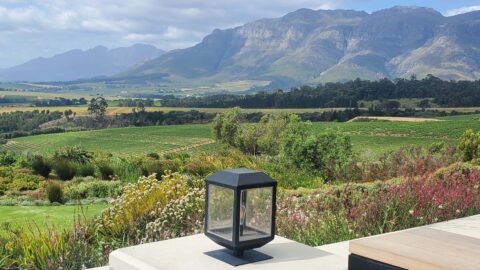
Before our tasting, we enjoyed a beautiful walk around the vineyards, passing through a stunning wildflower meadow before returning via woodland paths. The highlight came when a flock of what we believe were white storks flew overhead — a truly memorable moment that added to the sense of place.
We were then introduced to Fergus Elias, Head Winemaker. Fergus is the son of the highly respected winemaker Owen Elias, a pioneering figure in the English wine world. Clearly inheriting his father’s passion, Fergus spoke with remarkable energy and detail about Balfour’s winemaking philosophy, yeast management, fermentation techniques, and their evolving balance between sparkling and still wines. Today, Balfour produces between 600,000 and 800,000 bottles annually.
Tasting at Balfour
We enjoyed a broad tasting covering still and sparkling wines:
- Ortega – fresh, green, with good weight (no malolactic fermentation)
- Skye Chardonnay – flinty, elegant, with mouth-watering acidity
- Bacchus – fruity, punchy, though with a slightly divisive nose
- Lesley’s Brut – a blend led by Chardonnay, biscuity with a touch of sweetness
- Balfour Rosé – blended by assemblage, elegant and balanced
- Lesley’s Gold – a sweeter sparkling wine, less universally favoured
Fergus’s enthusiasm was infectious, and his technical insights gave us plenty to think about — even if some details tested our understanding!
Dinner at Noble Rot
Returning to London, ten of us rounded off the day with dinner at Noble Rot. The highlight was a blind tasting organised by Abbie: a Chablis that divided opinion, with most of us leaning towards a cool-climate New World Chardonnay. Regardless, the meal was excellent, and the perfect conclusion to a memorable day.
Acknowledgements
We extend our sincere thanks to both Gusbourne and Balfour for their generous hospitality, and above all to Linda, whose efforts in organising this trip — coordinating numbers, transport, and vineyard visits — made the day possible. With 15 participants and even a waiting list, this was clearly a popular outing, and we look forward to many more.