Go Turkiye Go
In March I was lucky to be invited by GoTurkiye to visit Istanbul and travel the Thrace Wine Route.
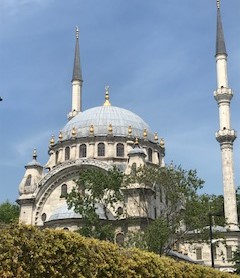
It started with two days in Istanbul. Vibrant, romantic, seductive Istanbul, full of hidden promise and exotic food: One imagines travelling with Ernest Hemingway while he was a war correspondent, or sitting with Agatha Christie as she writes Murder on the Orient Express in room 411 of the Pera Palace Hotel. (the famous train is due to start running again, although sadly not to Istanbul).
The experience of sunset drinks on the Bosphorus, a visit to the Hurrem Sultan Hamman and haggling at the Grand Bazaar cements the image. Istanbul offers magical moments.
But now on to Wine. Firstly, historical evidence suggests that Turkiye, (note new spelling) is one of the oldest wine producing countries, dating back some 6000 years; this explains the vast number, (ca 3000) of different grape varieties grown here in the Turkish wine catalogue. Today there are around 150 different grapes commercially grown here.
Turkiye is the 6th largest producer of grapes with 500,000 ha. of land under vine, but the vast majority of grapes are used for table grapes, or dried raisins, with only 2% finding their way into wine. Given the land mass and situation of Turkiye there are considerable regional differences in both climate and topography offering great opportunities for producing a diverse range of wine styles. Still much of Turkiye still remains uncharted viticulturally, and even getting a high quality wine map of the regions is difficult. With a population of 85 million and over 55 million visitors annually the opportunities for wine look vast.
But there appears to be little support for the industry and there are several factors that are making the wine business in Turkiye challenging in the extreme at the present time.
Firstly, despite being a secular country of 85 million people, Turkiye is a Muslim-majority nation with 83% of the population being teetotal. Secondly, a special consumption tax on alcohol, and other goods, was introduced in 2002, and this has increased greatly over the years; tax expert Ozan Bingol estimates that the special consumption tax on alcohol has increased by 1,543% in thirteen years. Recently yet another blow has been dealt to the wine industry in the form of an alcohol bond. This requires, by law, each producer to deposit between 5 to 50 million Turkish Lira (£130,000-£1.3 million) to cover any future tax or administrative fines in the future. However, the establishment of this law is proving controversial, and justifiably smaller producers in particular are up in arms.
All this seems to make the future of one old the oldest wine producing countries somewhat precarious. However, as history has often shown us, a Phoenix can rise from the ashes.
Thrace is located in South Eastern Europe, north west of Istanbul, borders Greece and Bulgaria and the Marmara, Black and Aegean seas. It produces around 14% of Turkish wine and is home to 40% of Turkish wine producers. Given the number of producers and the proximity to Istanbul this is a prime area for tourism and wine tourism in particular. The area is served by Istanbul International airport, which connects to 270+ destinations worldwide. The newly constructed “1915 Canakkale bridge connects Europe and Asia in the Dardanelles. The domestic airport of Canakkale has the potential to be the gateway for luxury tourism with proximity to the wine region.
So what aces do the producers have up their sleeves? Tourism and wine-making.
We visited 4 wineries, Badur, Barbare, Melen and Gali as well as an evening tasting at the Bengodi hotel of Asmadan wines, to discover what cards they are playing.
While all these wine producers have differences, remarkably there are many similarities between the strategies these producers have chosen to combat the threats posed.
Themed tourism has grown exponentially over the last 20 years. It appears we humans are no longer content just to get away for a rest or to lie in the sun; many of us now want a purpose or a cultural or learning experience as well. Hence the growth of wine tourism across the world. So what better card to play, for a Turkish wine producer, than tourism in a country steeped in history and mystery.
Each producer visited exploits the tourism card to varying levels, with some offers fully developed and others in the planning stage. All recognize the draw of matching their wines to delicious local cuisine.
At Badur winery, planted in 2019, tourism is in its infancy with a small museum of local artifacts and plans in place for a small hotel at the winery. 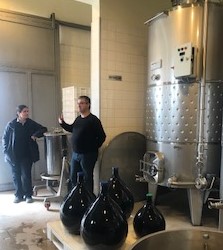
Set on top of a hill with stunning views that would attract any tourist Barbare winery has a more developed tourism offering, with both a hotel and high class restaurant. The revenue from the hotel sustains the wine business, underlying the financial pressures of being dependent on wine revenue alone. But this family owned estate realized the financial importance of tourism early on, with daughter Deniz Topsakal studying hospitality in Switzerland to ensure a top class offering. 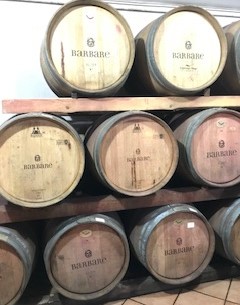
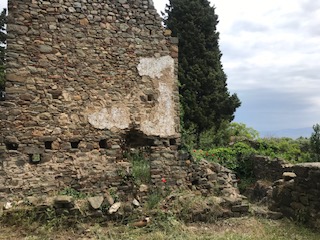
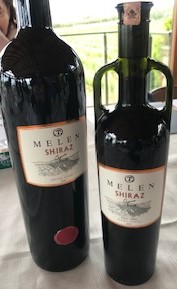
Melen winery also has enchanting views from its hill top location and also offers wine tastings accompanied with ever changing delicious local food. However, the real ace played at Melen is the St. Ioannis Theologos Monastery nestled within the vineyards. Part of the tourist experience is a romantic sunset walk through the ruined monastery. The Cetintas family aspire to renovate the monastery and include a cultural hub including a museum, workshop and exhibition hall.
At Gali winery Dr Joseph and Janice Gali the tasting room offers gourmet charcuterie and cheese boxes to complement their wines.
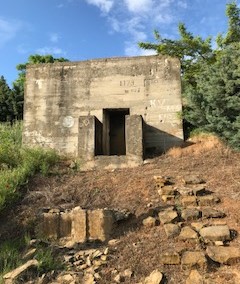
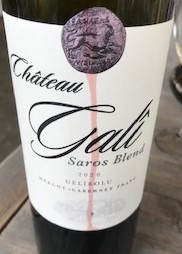
But expansion of the tourist offering is on the way! The property is home to coastal defense bunkers, built during the second world war, and these are destined to be converted into tourist accommodation.
Lastly, but not least, on the wine tourist trail is the established Bengodi boutique hotel and its winery Asmadan, complimented with a wine museum a restaurant and boutique.
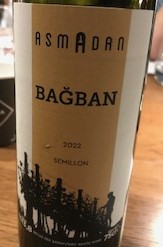
However, if the wines do not tickle the palate of the tourist no hotel, food or monastery will save your vineyard, therefore wine-making is key. Historically, when Turkish wines came to mind, thoughts of oxidized whites and aggressively tannic reds with unknown grape varieties ensued. And while some tannic structure complements much Turkish food, oxidised whites are very out of fashion.
So come forward the consultant and international varieties. All the vineyards visited have plantings of, mainly French, international varieties, (with Gali and Barbare exclusively so) together with some native Turkish varieties. This, with 4 of the 5 properties visited employing a French consultant/vigneron has given a more European feel to the wines: there is now temperature controlled wine-making, less extraction and more judicious use of oak. However, I feel it would be a pity to lose focus on the vast array of indigenous varieties, with cooler fermented Turkish white varieties, such as Narince and Emir, producing some very pretty and sometimes intriguing wines.
But, all this said about modern wine-making, the wine of the trip for me was undoubtedly Melen Mateos vintage 1955 made in the days before temperature control. A white wine blend of Kolorko and Yapincak grapes with a layered, complex nose combining dried tree fruits, caramel, walnuts, dark chocolate and dried Mediterranean herbs. The previous bottle opened by the Cetintas family was when the current head of the family proposed to his now wife!
No one can doubt the passion and commitment of these winemakers, who against seemly overwhelming odds, are determined to keep the flag flying for Turkish wine.